Request Quote
Thank you! Your submission has been received!
Oops! Something went wrong while submitting the form.

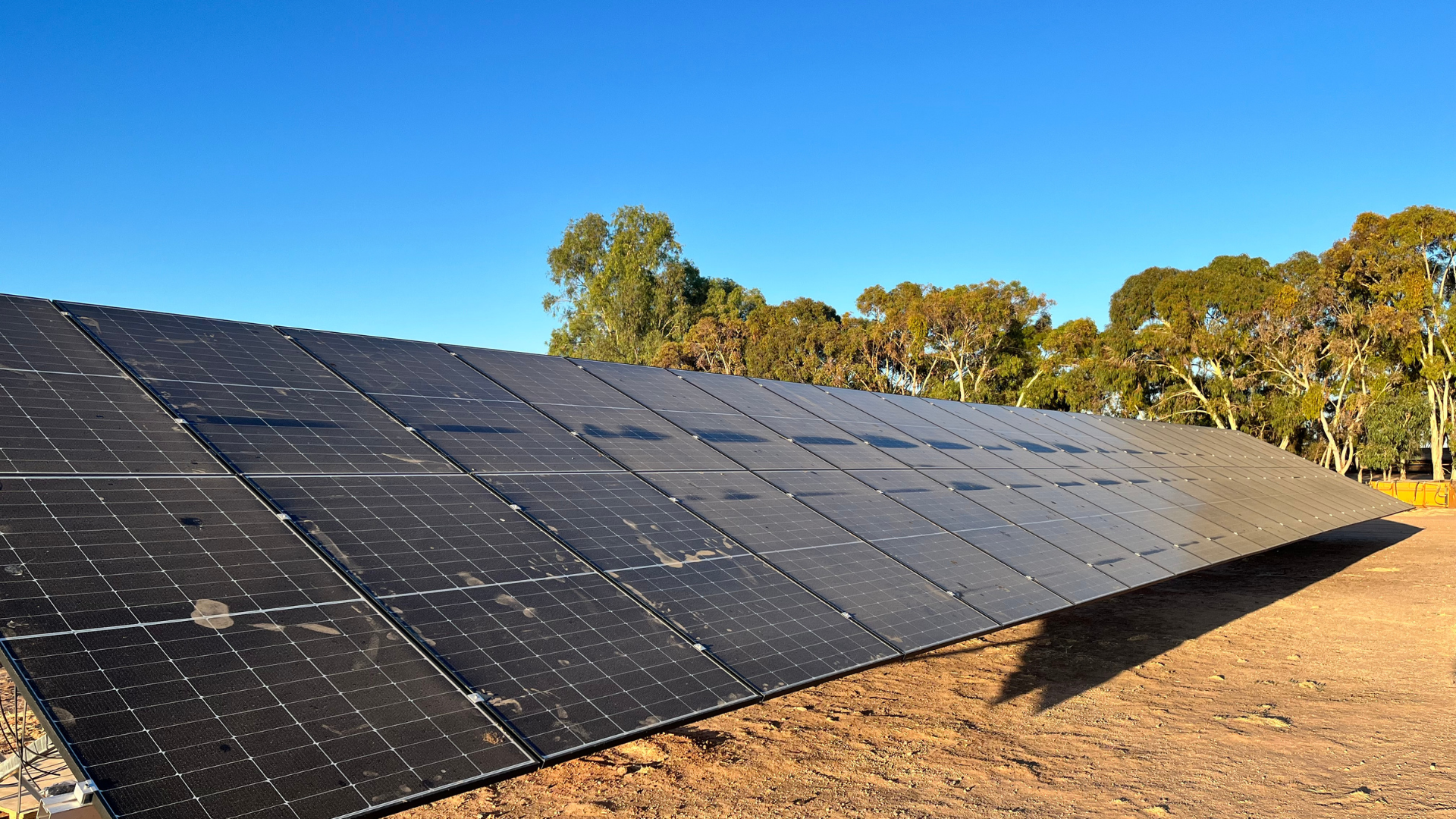
Flicking everything on at the start of the day should be simple. Lights come up, the compressor kicks in, fans start moving air. But for a lot of sheds running on off-grid or hybrid solar, that moment is exactly where the trouble starts. Motors try to fire up, the inverter sees a current spike it cannot handle, and the whole shed goes dark.
Black-starts are the real test of any off-grid system. That is when everything wakes up from the cold with low batteries, no solar input yet, and multiple motors trying to start at once. After a run of cloudy days or a heavy overnight load, the margins get even tighter. A system that handles a sunny afternoon without any drama can fall apart completely at six in the morning.
Solar power can absolutely run serious shed loads. The system just needs to be designed around worst-case starts, not average daily consumption. This guide covers why motors and compressors struggle on solar, what to check first in your inverter, batteries and wiring, and how tools like soft starters, variable speed drives and load sequencing can solve the problem without oversizing everything.
Most motors are well-behaved once they are up and running. The problem is the moment before that. A motor or compressor can pull three to eight times its normal running current for a second or two while it gets moving, and that starting spike is what catches off-grid systems out. On the grid, the network barely notices. On a solar inverter, that same spike can be enough to trip the whole shed.
Some loads are harder to start than others, and certain types show up on problem lists time and again.
Farm sheds add a few more layers on top of that. Older motors tend to have higher inrush current than modern ones. Many sheds run a mix of three-phase and single-phase gear on the same system. Welders and power tools get plugged in at unpredictable times and add to the load at the worst moments.
Grid power barely flinches at these spikes because there is an enormous amount of generation capacity behind the connection. With solar, the inverter and batteries are your entire grid. If they are not sized and configured around worst-case starting conditions, including busy periods like harvest or shearing, the system will feel underpowered even when the panels and battery bank look perfectly adequate on paper.
A solar system for a working shed needs to be designed around a few things that often get overlooked.
Getting those inputs right at the planning stage is what separates a system that works every morning from one that works most mornings.
When motors refuse to start, most people assume the motor is the problem. Usually it is not. The issue is almost always in the power feeding it, and a few basic checks can save a lot of time before anyone starts pulling things apart.
Your inverter has two ratings that matter here: continuous and surge. The surge rating is what it can deliver for a short burst when a motor starts, and some inverters can only hold that peak for a fraction of a second before they shut down.
Worth doing: add up everything that could be running when that big motor tries to kick on. Fridges, freezers and small pressure pumps cycling in the background seem harmless on their own, but they stack onto the starting spike and can push the inverter past its limit at exactly the wrong moment.
When a heavy load starts, battery voltage dips. How far it dips is what matters.
Drop too deep and the inverter shuts down on low voltage protection. The motor fails to start, the system briefly recovers, and the whole thing tries again. That repeating loop is genuinely frustrating to diagnose if you have not seen it before.
The usual culprits are low state of charge going into the start, hot batteries that cannot deliver current cleanly, undersized battery cables and loose or corroded lugs. Any one of those will make sag worse than it needs to be.
Lights dimming when a motor tries to start. Contactors clacking instead of closing with a clean snap. Overloads tripping on motors that are not actually overloaded.
All of it points to the same thing: voltage sag in the supply. Long cable runs, thin cables and tired old joints between the inverter and the shed are where a lot of that voltage quietly disappears.
Once the basics check out, the most effective fix is usually not a bigger inverter. It is making the motors themselves less brutal at the moment they start.
A soft starter ramps a motor up gradually rather than slamming it on at full voltage. That reduces peak inrush current significantly, which means the inverter sees a far more manageable load and the motor itself takes less mechanical punishment on every start.
For fixed-speed loads like most pumps, a soft starter is usually sufficient. A variable speed drive goes further by controlling motor speed continuously, which suits fans and variable flow pumps where output control is useful.
If the compressor, water pump and workshop fan all try to start within the same two seconds, soft starting alone will not solve it. The combined spike is simply too much.
Staggering starts with timers or relays is a straightforward fix.
In a warm climate with reliable sun, shifting the heaviest starts to mid-morning also helps. Batteries have had time to recover, the panels are already producing and the whole system has far more headroom to work with.
Most farm shed boards carry years of history. A breaker added here, a new circuit run there, a contactor replaced when the original finally gave up. On the grid that tends to work fine. On solar, those accumulated compromises have a habit of surfacing as problems that look different every time.
Breakers and overloads sized for grid power are not always the right fit for a solar supply. Set too sensitively for motor inrush, they will trip repeatedly on loads that are working completely normally. Getting protection settings calibrated to the actual loads and supply characteristics is a simple fix with an immediate payoff.
Worn contactors with weak coil springs or dirty contacts will also struggle to close cleanly during starting. Repeated failed start attempts put unnecessary strain on the motor and the inverter and quietly shorten the life of both.
Upsizing long shed feeder cables is one of the better value improvements on most existing installations. The voltage drop across an undersized run adds up fast when starting current spikes, and the difference between a frustrating system and a reliable one is often sitting right there.
Any lug showing heat marks or discolouration needs re-terminating. A bad connection adds resistance, generates heat and gets worse over time. Checking earthing and bonding at the same time keeps the inverter seeing a clean, stable system.
Many sheds have no formal logic governing which loads start first after an outage. Cool rooms, fans and pressure systems all racing to restart simultaneously is one of the most predictable causes of inverter trips, even if it looks random at the time.
Adding relays or a small programmable logic controller to manage start sequencing is not a complicated job, but it changes how the whole system behaves. Loads come on in a controlled order, each start gets handled cleanly and the shed comes back up the way it should every time.
Some situations are worth sorting out properly rather than patching and hoping. Repeated inverter trips every time a motor starts, burning smells near boards, cables that are hot or showing discolouration, or plans to add serious new plant like a chiller, compressor or auger are all signs that a fresh set of eyes on the whole system is a better investment than another afternoon resetting breakers.
A specialist who works with off-grid and hybrid systems looks at the shed as a complete picture, not just the motor that happened to cause the last fault. At AusPac Solar, black-start problems in working sheds are something we deal with regularly across farms, stations and commercial sites throughout Australia and the Pacific.
The more information you can bring to that conversation, the more useful it will be.
That groundwork makes it much easier to design a system that handles hard starts reliably, not just on a good day, but on cold mornings after cloudy stretches when the conditions are working against you.
If your shed is causing grief on solar or you are planning a new installation and want to get the design right from the start, we are ready to help. AusPac Solar assesses your energy use, shed layout, motor loads and local conditions so the system we design is built around how you actually work, not just what looks good on a specification sheet.
Talk with our team today to book an on-site assessment and get a clear picture of what a reliable solar power for machinery sheds looks like in practice.


