Request Quote
Thank you! Your submission has been received!
Oops! Something went wrong while submitting the form.

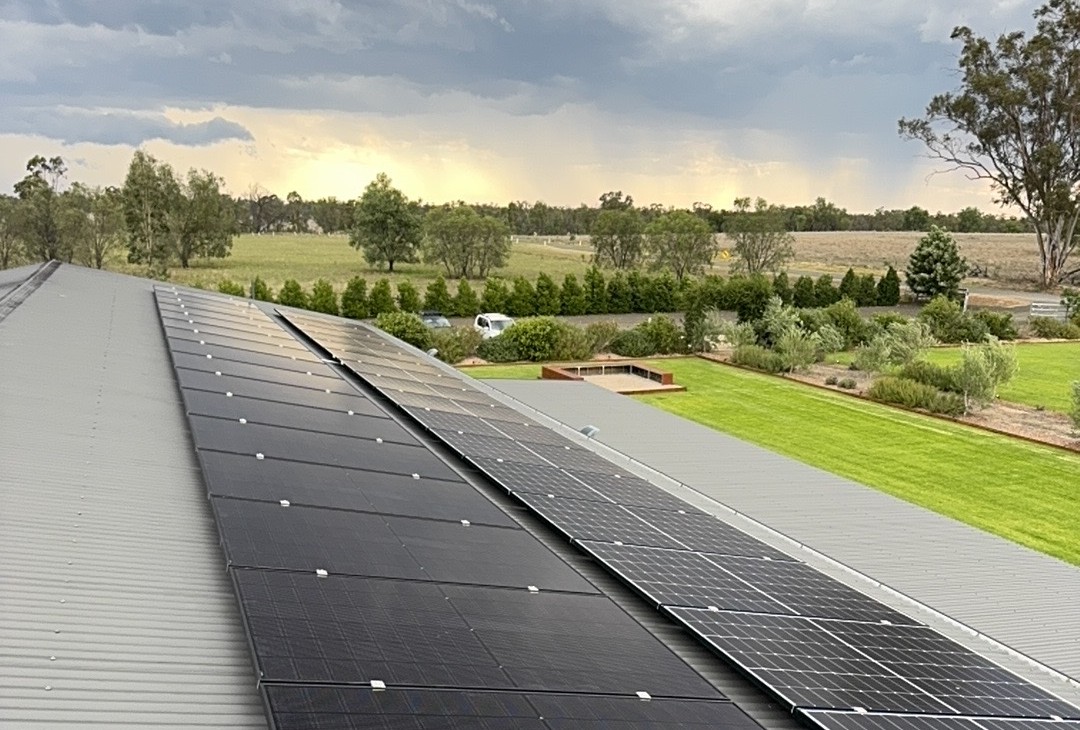
Power outages seem to come at the worst time, be it sale day, preg-testing run or shipping deadline. When the grid drops out halfway through a big yard session, hydraulic crushes stop, drafting stalls, water pumps cut out and stress levels jump for both people and livestock.
Off-grid power for livestock operations lets you keep working when the lines feeding your property cannot cope with storms, heat, bushfire conditions or just a weak rural supply. With the right solar, battery, inverter and generator setup, your hydraulic crush, auto-drafters, lighting and pressure pumps keep running so your farm does not grind to a halt. At AusPac Solar, our focus is on real yard loads out in regional Australia and the Pacific, not just neat household averages that fall over when a big motor kicks in.
Most powered gear in a set of yards runs on electric motors. A lot of them do not draw the same power all the time. There is a big difference between the steady running load and the surge of current needed to get a motor turning in the first place.
Running load is what the motor pulls once it is up to speed and doing its job. Motor start load, also called inrush current, is the short, sharp burst of power when the motor first starts. For many motors, that starting current can be several times higher than the number on the nameplate. That is where many solar and battery systems come unstuck.
Common powered equipment around livestock yards includes gear like:
On a busy day, it is common to have more than one of these motors starting around the same time. A crush cycles, a pump kicks in to top up pressure, someone starts the pressure cleaner, and suddenly the system sees a spike in demand. If the inverter or cabling is sized only for average use, not these peaks, the results can be:
Standard solar-battery packages that are only designed for house loads like fridges and lights often do not account for these short, heavy hits. Yards call for a different way of thinking about power.
Good off-grid power for livestock operations starts with the motors, not the panels. The inverter needs to be sized for the peak start loads of your yard gear. That means adding up the worst-case combination of motors that may start together and allowing for headroom.
When we look at an off-grid setup for yards, we think about:
Batteries are just as important. Hydraulic crushes and drafting systems can pull hard for short bursts. That can cause high discharge rates and voltage sag in the battery bank if it is undersized or not suited to that style of load. A good design gives you:
We also look at your year, not just an average week. Yards do not run flat out every day. Loads spike around things like weaning, preg-testing, shearing, shipping and sale runs. Designing for those peak seasons means your system will hold steady when you need it most, and you can add extra equipment later without starting from scratch.
When power drops out in the middle of a crush cycle, the risk is more than just inconvenience. Livestock can panic and push, staff can get caught out of position and equipment can jam or fail. Good electrical design helps reduce these problems long before anything goes wrong.
Key safety features include:
Power design should also follow the way you actually work the yards. Controls should be within safe reach. Hydraulic crushes may need a way to lower or release safely if the main system trips, either with backup power or a planned manual override. We like to walk through your normal yard flow and think about where people stand, how animals move and what needs to stay live even when other things shut down.
Even the best solar-battery system has limits, especially on short winter days or during long runs when everything is working hard. That is where good backup planning makes all the difference. Generators, either diesel or petrol, can form part of a hybrid setup that supports your off-grid system instead of replacing it.
An integrated generator can:
We also think about redundancy and priorities. In many yards, some loads are more important than others. For example:
By putting crushes and drafting systems on dedicated backup circuits, you can keep the core of the yard running even if you need to shed other loads for a while. Seasonal planning matters too, especially around the middle of the year when daylight is shorter and livestock work often ramps up. A good design will let you keep working through those busier periods without riding the edge of your system all day.
When new yards or major upgrades are on the table, energy design should be part of the planning from the start. It is much easier to get cable routes, switchboard locations and concrete penetrations right before the steel goes up than to cut and rework things later.
A practical planning process usually covers:
At AusPac Solar, we design and install off-grid and hybrid solar systems for farms, homes and businesses across regional Australia and the Pacific, with a strong focus on rural and remote energy independence. We work alongside your builder, electrician and crush and drafting suppliers so motor loads, safety systems and backup plans all line up in one clear design. With that groundwork in place, your livestock yards are ready to keep moving smoothly, even when the grid or the weather has other ideas.
If you are ready to cut your reliance on the grid and keep water pumps, fencing and sheds running smoothly, we can help you design the right system for your property. At AusPac Solar, we work with you to tailor off-grid power for livestock operations built for Australian conditions and daily farm demands.
Talk with our team about your livestock numbers, layout and future plans so we can size a solution that protects animal welfare and cuts energy stress. Get in touch today to take the next step toward a more resilient and predictable power supply for your farm.


