Request Quote
Thank you! Your submission has been received!
Oops! Something went wrong while submitting the form.

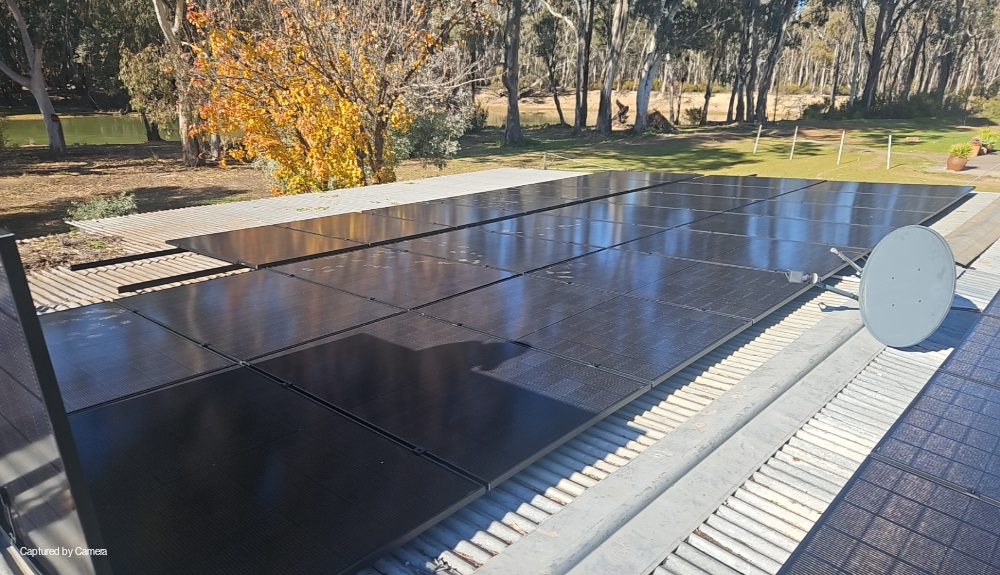
Keeping water moving on a remote Queensland property is not a preference. It is the whole operation. Cattle, crops and people depend on steady flow around the clock, and when power or fuel lets you down, everything on the place pays for it.
Most remote sites are still running diesel pumps or grid lines stretched over long distances. They manage until they do not. A breakdown during a heatwave, a wet-season cut-off or the middle of calving is not an inconvenience. It is a serious problem.
This article covers why solar is such a strong fit for remote Queensland pumping, how well-designed systems hold up through the wet and the dry, and what it takes to keep water moving when conditions get tough.
Remote Queensland is genuinely tough on pumps and power infrastructure. Long distances between properties, rough access tracks and relentless UV all take a toll on electrical gear and motors. When something goes wrong out here, it is rarely a quick fix.
Most properties are running a combination of bore pumps supplying header tanks, dam or creek pumps feeding storage or irrigation, long poly runs to troughs across rises and gullies, and high-lift pumps pushing water up to tanks on hills. That is a lot of moving parts spread across a lot of country.
Getting big pumps started on a weak or tired supply adds another layer of risk. Voltage drop on old power lines or long cable runs causes nuisance trips and can stop a motor from kicking over at the worst possible time. Generators sitting idle between seasons are notorious for failing the moment you actually need them running every day.
A pump failure on a remote property is never just a minor inconvenience. The impacts move quickly across the whole operation.
If rain or floods cut the roads, you might not see fuel or a sparky for weeks. That is exactly why more property owners are moving toward systems that run reliably with minimal attention, even when the wet has everything else shut down.
A solar pump system is straightforward in the way it works. The core components are simple, and there are far fewer things that can go wrong compared to a diesel setup.
Remote Queensland suits this setup well. Long clear days through the dry season give you strong, consistent solar output right when demand is highest. A properly sized array can push hard through the middle of the day, filling header tanks and storage while the sun does the heavy lifting.
The practical advantages over diesel or long grid extensions become clear pretty quickly once a system is running.
Rather than pumping only when a generator is switched on, a solar pump runs whenever there is usable light. Water builds up in tanks throughout the day, and those tanks act as a buffer through cloudy stretches. When the system is designed well, you rarely notice the variation.
Good solar pumping comes down to getting the design right before anything goes in the ground. At AusPac Solar, we start with what the pump needs to do rather than working backwards from a panel count.
That means taking a close look at the specifics of your property.
Matching the pump curve to the solar profile is one of the more important steps in the process. The goal is a pump that runs strongly when the sun is high, still turns over in softer light and does not trip or stall through normal weather variation. For some properties, a hybrid setup makes sense, with a diesel unit or grid connection available as a backup for extended low-light periods.
Remote Queensland conditions demand serious attention to materials and installation quality. Storms, high winds, coastal salt air and mineral-rich bore water all create real risks for equipment that has not been specified correctly.
Remote monitoring capability is worth serious consideration for properties far from town. Being able to check tank levels, pump status and solar performance from your phone means small issues can be caught before they become costly ones. Auto-restart functions can clear simple faults without anyone needing to drive to the site, and alert settings give you early warning if something is not performing as it should.
Properties across Queensland are steadily moving key pumps across to solar, and the applications that tend to perform best share a few common traits. They have consistent daily demand, reliable sun exposure and enough storage to ride through weather variation.
When diesel run-time drops, the change in day-to-day workload is noticeable fairly quickly. Less time moving drums, checking gauges and chasing parts. Backup generators shift from daily workhorses to genuine emergency cover, which extends their life considerably.
The outcomes that come up most consistently across well-designed solar pump projects are practical rather than theoretical.
A few design lessons also come up repeatedly. More tank storage than you think you need is almost always worth it. Extra solar capacity helps manage late wet-season cloud cover and dust build-up on panels. Layouts that make servicing straightforward save real time when conditions are difficult. And remote diagnostics mean you can check on a system without committing to a long drive on a rough track.
Getting the design right from the start avoids a lot of unnecessary frustration, particularly when you know the roads may be cut and qualified tradespeople are not easy to get hold of at short notice.
Autumn is a practical time to think seriously about water and pumping infrastructure. The worst of the heat has passed, workloads allow a bit more flexibility and the memory of what caused grief over the last dry or wet season is still fresh. That is a good position from which to assess which pumps let you down and where solar could take the pressure off.
AusPac Solar focuses on off-grid and hybrid systems for rural and remote properties across Australia and the Pacific. For pump projects, we typically start with property maps, existing pump details and a look at current fuel use and run-times. From there we develop a design, installation plan and projected performance that works around mustering, cropping and other key dates, so everything is in place well before the next wet season closes the tracks.
If you are ready to cut fuel costs and put more reliable water infrastructure in place, AusPac Solar can help you design a system that suits your property and your operation. We specialise in off-grid and hybrid solar energy for remote Queensland, handling everything from the initial assessment through to installation and ongoing support.
Talk to our team about your pumping setup and we will work through the best approach for your site.


