Request Quote
Thank you! Your submission has been received!
Oops! Something went wrong while submitting the form.

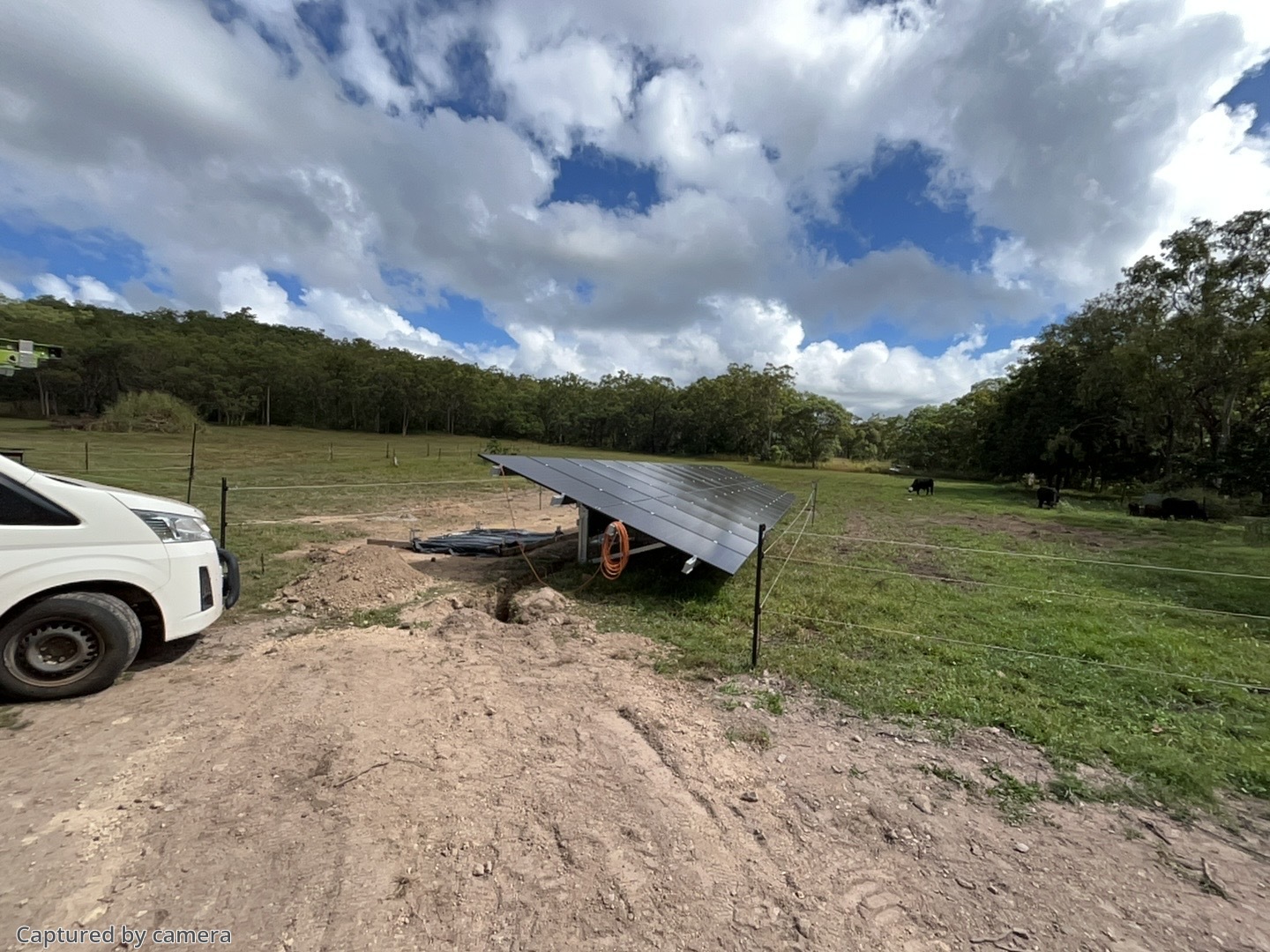
A solar system for a rural property can look like the right fit on day one. The pumps are running, the house is comfortable, the shed tools fire up without complaint. Then a new bore goes in, another building gets added, or a piece of heavy equipment arrives, and that original system starts showing its limits.
The problem is rarely the solar itself. It is the planning that came before it.
Most rural properties do not stay the same. Operations grow, cropping patterns shift, technology changes, and what worked in year one can be genuinely inadequate by year five. When solar and battery systems are not designed with that growth in mind, owners end up patching the gaps with generators, managing avoidable outages at the worst possible times, and paying to redo work that could have been handled correctly from the start.
AusPac Solar designs and installs off-grid and hybrid systems for farms, rural homes, and businesses across Australia and the Pacific, with forward planning built into every project. This article covers how rural energy loads tend to grow over time, what a well-designed expandable system looks like, and how to prepare for seasonal peaks and remote site conditions so the system can keep pace as the property evolves.
Most rural properties grow in stages. One year it is a new bore. The next, it is workers' quarters, a cool room, or a processing shed. Each addition layers more demand onto a system that was originally sized for a different operation.
Nameplate ratings on pumps, chillers and tools only tell part of the story. What matters just as much is how those loads behave across a full year of operation.
In practice, energy demand climbs when harvest runs longer into the night, when cropping patterns shift and pumps run more frequently, when hotter summers keep air conditioning units running well into the evening, and when automation brings sensors, controllers and charging docks into the mix.
Common triggers for significant load growth include new or deeper bores with higher-pressure irrigation pumps, additional cold storage or ice machines, expanded accommodation or staff facilities, and new sheds, workshops or agritourism setups.
A practical way to get ahead of this is to map both current and likely future loads before the system is designed. That process typically covers a load audit of existing equipment and operating hours, a list of buildings, pumps and machinery expected within the next five to ten years, and likely technology changes such as EV utes, electric fencing, drones or on-farm robotics.
Strong summer solar production can look reassuring on paper, but afternoon and evening cooling loads often arrive at exactly the same time production starts dropping. Irrigation peaks tend to hit in shoulder seasons when rainfall is unreliable, and stormy periods reduce solar output precisely when grid reliability is also at its lowest.
Accounting for all of these factors provides a moving picture of energy demand rather than a single snapshot. That picture is what drives a system design capable of growing alongside the property.
A well-designed off-grid or hybrid system is not a fixed box. It is more like a structural frame. It starts with a strong core, then allows sections to be added as the property's needs change without pulling the whole thing apart and starting again.
Modular, staged design usually means specifying a main inverter or inverter cluster that can be paralleled later, leaving space on switchboards for extra circuits and future sub-boards, and reserving physical locations for additional solar strings or battery racks before they are needed.
Solar array planning is a significant part of this. Where the budget allows, oversizing the array slightly relative to first-year loads is often a sound decision. It is also worth leaving roof or ground space available for extra panels, mixing array orientations to extend the useful solar window across the day, and planning DC cable routes so adding strings later does not require extensive new trenching across the property.
Inverter and battery selections have a strong influence on how easily the system can scale. Inverters that can operate in parallel mean additional units can be brought in for more power without replacing what is already there. Battery systems that accept extra modules without a full rebuild are similarly valuable. Clear separation between critical loads and general loads in the wiring layout also makes future changes significantly more straightforward.
The right approach depends on what is available on site. Where a grid connection exists, it can serve as a safety net for occasional peaks, and some owners design the solar and batteries to cover normal daily use while keeping the grid in reserve. Others prefer full autonomy so the property continues operating even when lines are down. That preference shapes how much headroom is built into the original design and how expansion gets staged over time.
Solar panels are only one part of the equation. On rural properties, batteries and backup arrangements determine whether power holds through the evening, through overcast stretches, and through the seasons that push a system hardest.
Battery planning usually comes down to three things: what the evening and early morning peaks look like, which loads are non-negotiable such as water, refrigeration and communications, and how many consecutive low-sun days the system should handle independently before a generator steps in.
A layered setup tends to work well for rural properties. Solar covers the main daytime supply. Batteries are sized for regular night-time use with a buffer built in. A well-matched generator with smart charging handles the battery top-up when solar input falls short. Automatic changeover means the system manages itself without someone needing to intervene at two in the morning.
Load management tools add another layer of value from the same hardware. Running non-critical pumps in the middle of the solar day, shedding non-essential loads when batteries are low, and keeping priority circuits active while other loads pause are all practical ways to get more out of the installed capacity.
As the year moves toward storm season and shorter daylight hours, it is worth reviewing storage and backup before the pressure arrives rather than after. Animal care schedules, irrigation timing and processing runs all shift through the year, and those changes flow directly into how batteries and generators are used on the ground.
Rural and island sites bring challenges that a suburban installation simply does not face. Heat, dust, salt air, termites, long cable runs and access tracks that turn unreliable after rain all put pressure on hardware and planning alike. A system specified for easier conditions can struggle significantly under these realities.
For remote locations, panel and inverter hardware needs to be rated for high temperatures and harsh environments rather than just adequate for moderate ones. Cable sizing has to account for voltage drop across long runs. Surge and lightning protection matters more on exposed ridges and open paddocks than it does in sheltered settings. Weatherproof enclosures that keep out dust, moisture and wildlife are not optional extras in these conditions.
Maintenance planning belongs at the design stage, not after installation. Systems that are easy to monitor remotely allow issues to be caught early before they become failures. Layouts that keep fuses, breakers and key components accessible mean less time and cost when service is needed. Clear labelling throughout ensures that on-site staff can understand what each part does without needing to call for support every time something requires attention.
Getting equipment to site and installing it without disrupting operations requires its own planning. Prefabricated skids that arrive mostly assembled reduce on-site work significantly. Ground-mount frames need to suit local soils and wind conditions rather than being specified generically. Scheduling installation work around planting, harvest, mustering or peak tourist periods keeps disruption to a minimum and means the property can keep running normally through the process.
Before the next busy season arrives, it is worth stepping back and looking at where the property is actually heading. New pumps, cool rooms or machinery under consideration, planned sheds, workshops or tourism developments, and technology changes such as EVs, automation or expanded remote monitoring all affect what the right system looks like today versus what it will need to do in three or five years.
A thorough planning process covers a detailed load review, a conversation about five to ten year operational plans, and a site visit to understand the actual conditions on the ground rather than working from assumptions. From there, a staged off-grid or hybrid system can be designed to grow alongside the property, reduce diesel dependency, and support reliable operation as requirements change.
Getting the design choices right early means the system becomes a long-term foundation for the property rather than something that is outgrown before it has paid for itself.
AusPac Solar works with rural properties across Australia and the Pacific to design and deliver off-grid and hybrid systems built for the conditions that exist on site, not just the ones that look straightforward on a spec sheet.
If you are ready to reduce your diesel costs and build a power system that can grow with your operation, our team is available to work through the details with you. Explore how our tailored solar systems for rural properties can work with your land, roof space and existing infrastructure. We handle design, installation, and ongoing support so you have a single point of contact from the first conversation through to long-term performance.


